
Diamond engagement ring macro detail
Engagement Ring Guide

The Anatomy of
an Engagement Ring

Before you design yours, it helps to know the language. Here's what every part of a ring is called, and why it matters.
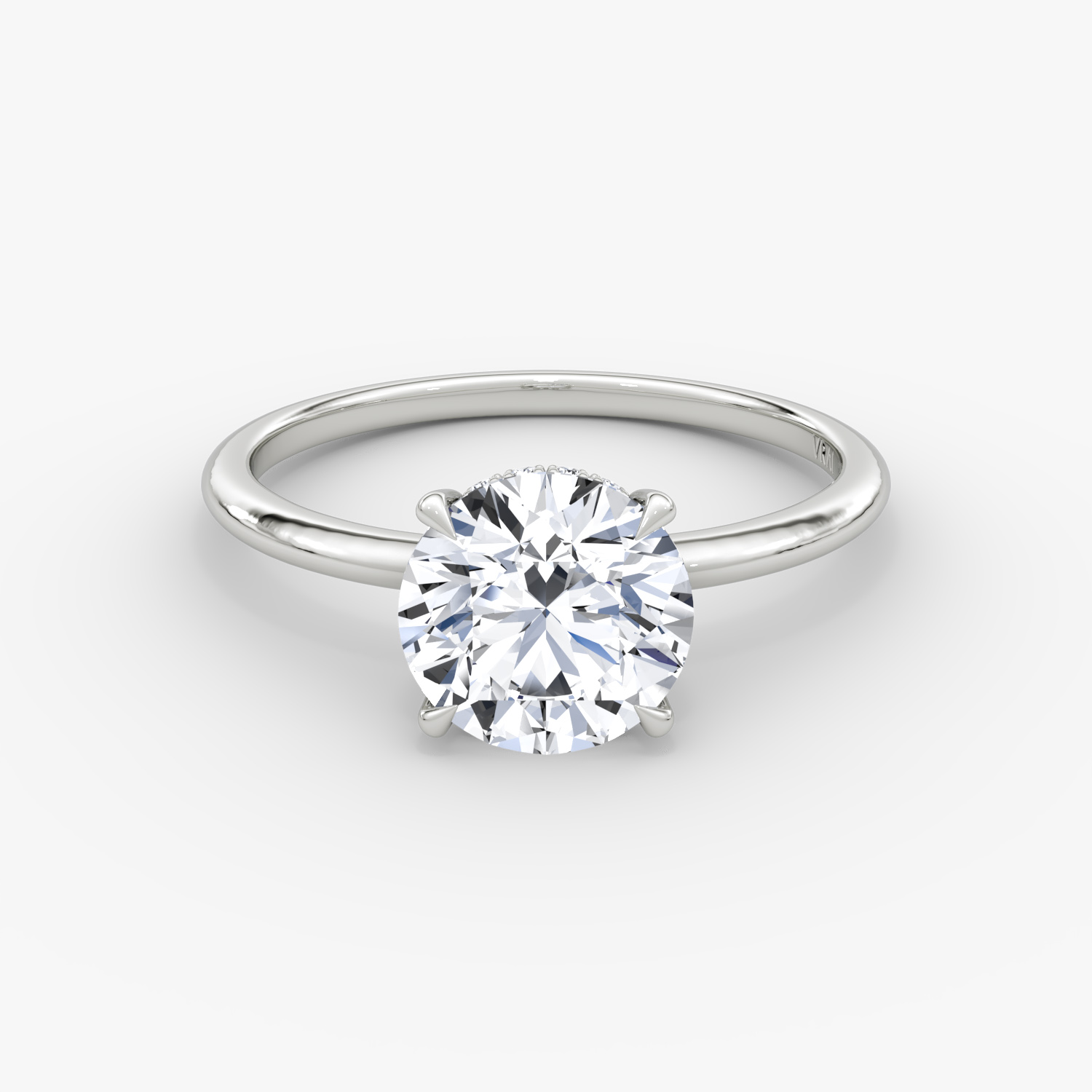
Getting to Know the Ring

The Same Ring, Explained Simply

A ring is made of more parts than most people realize, and understanding them makes every conversation about your design easier. Here's a plain-language guide to what you're actually choosing when you commission a piece with us.

Center stone detail on a custom engagement ring

Center Stone

The center stone is the heart of the ring — usually a diamond or other gemstone, set higher and larger than anything else on the band. Most are cut and measured in carats, with round, oval, emerald, and pear among the most requested shapes. This is where your personality shows most: the stone's shape, size, and cut set the tone for everything else.
Ring setting and mounting detail

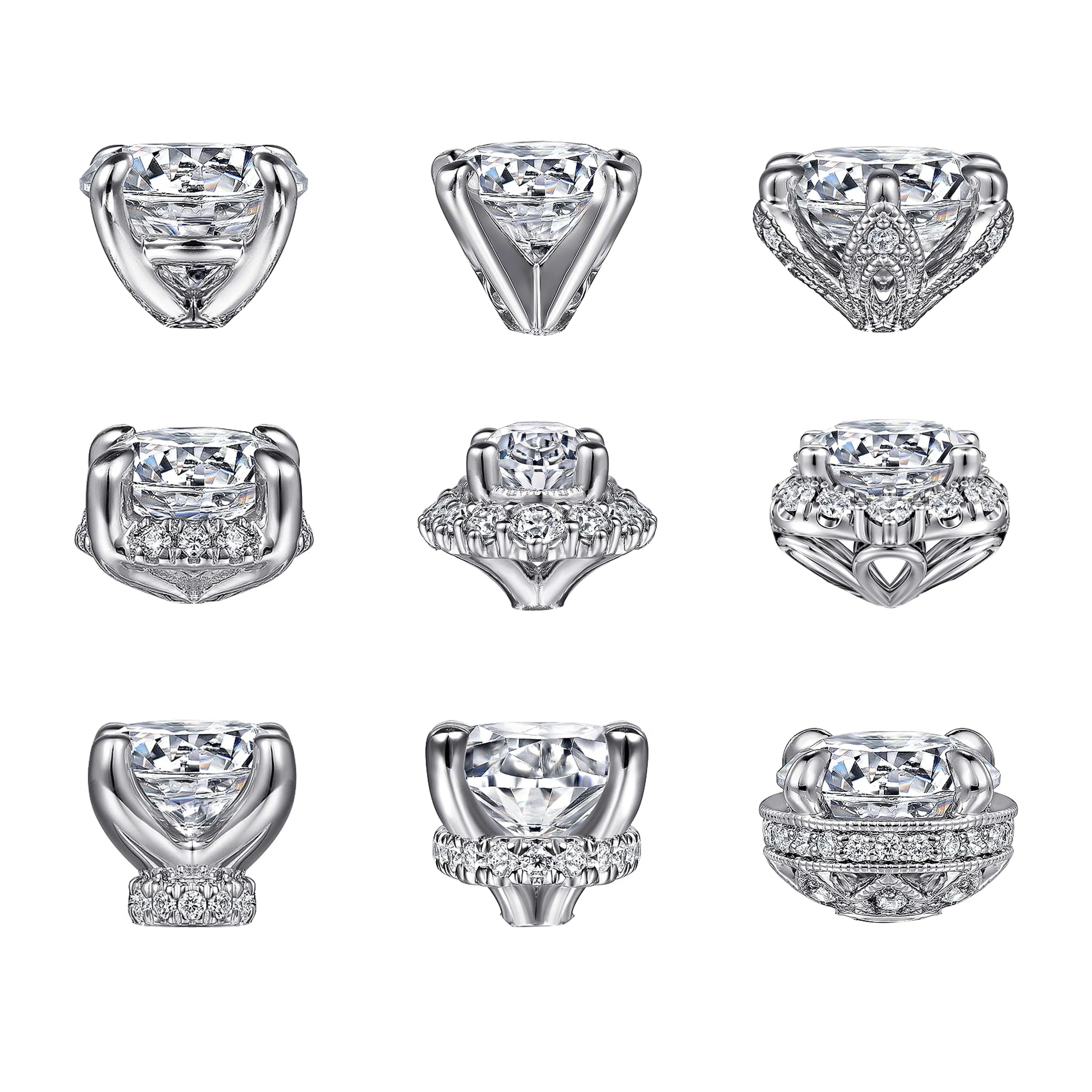
Setting & Mounting

The setting is the metal structure that holds your stone in place and gives the ring its overall character — vintage, modern, or classic. Prong settings show off more of the stone; bezel settings wrap around it for extra protection. We'll walk through the options together so the setting matches how you'll actually wear the ring day to day.
Side stones and halo setting detail

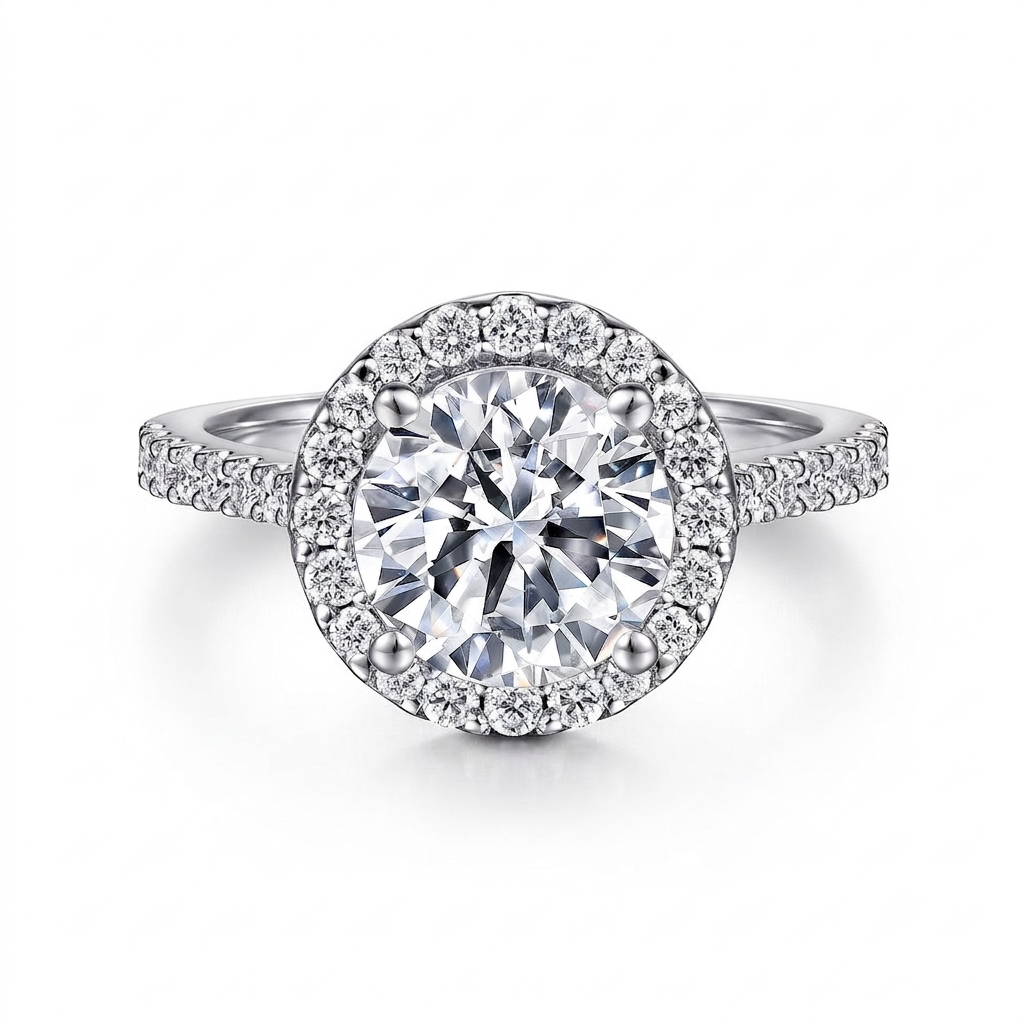
Side Stones & Halo Settings

Side stones are smaller diamonds or gemstones set beside the center stone, often used in three-stone designs to add extra sparkle or symbolism. A halo setting instead surrounds the center stone with a ring of smaller stones — it makes the center stone look larger and adds shimmer from every angle, without changing the carat weight itself.

Good to Know

The Structural Details

A few more terms worth knowing before your consultation.
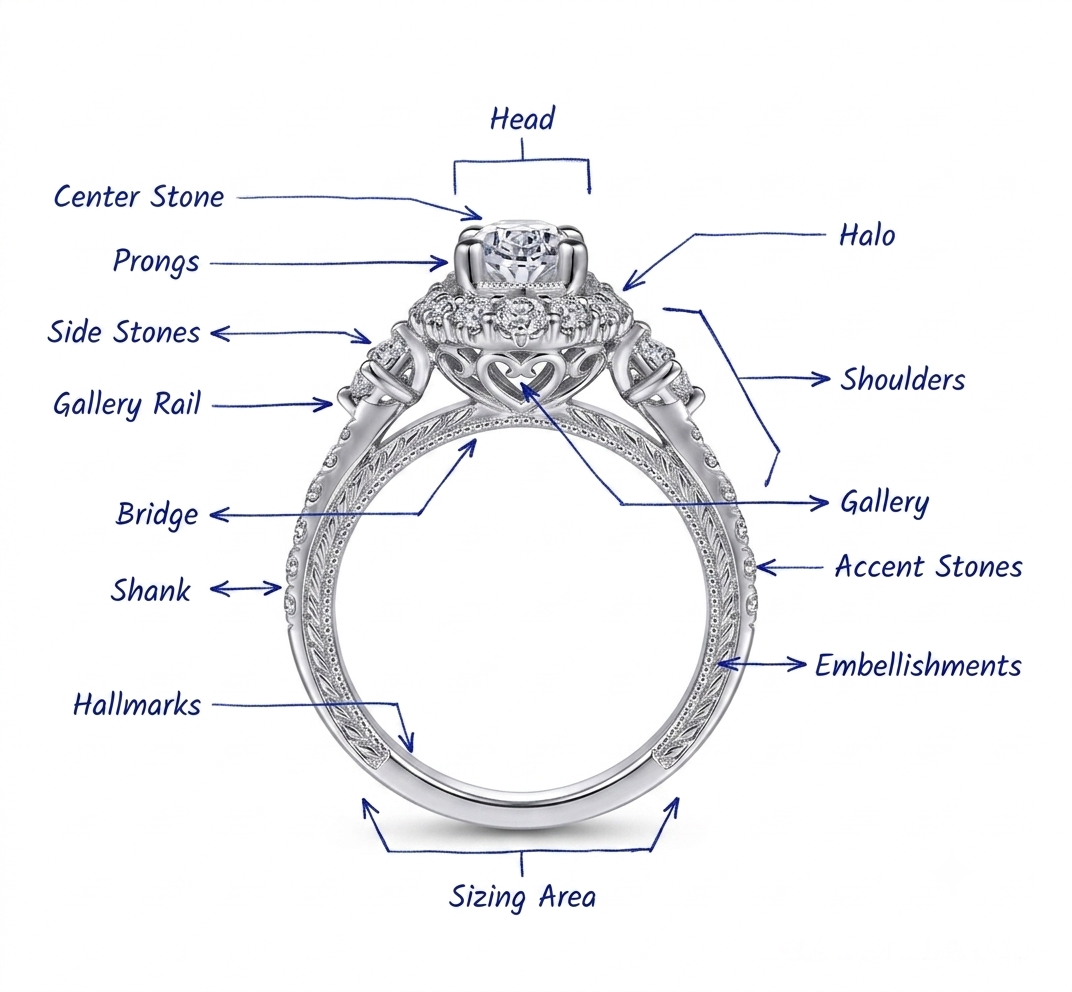
Diagram of an engagement ring's structural parts: head, gallery, bridge, shoulder and shank
  • Head / Crown The prongs or metal that grip the center stone and hold it securely in place.
  • Gallery The open metalwork just beneath the stone, adding airiness and letting light reach it from below.
  • Bridge The horizontal metal connecting the head to the shank, common in three-stone or halo designs.
  • Shoulder The part of the band rising up to meet the setting, often where accent stones are added.
  • Shank The band itself — plain, pavé-set with diamonds, or shaped for comfort.
Ready to Begin?

Design a Ring
That's Entirely Yours

Book a Consultation
WhatsApp Book a Consultation